
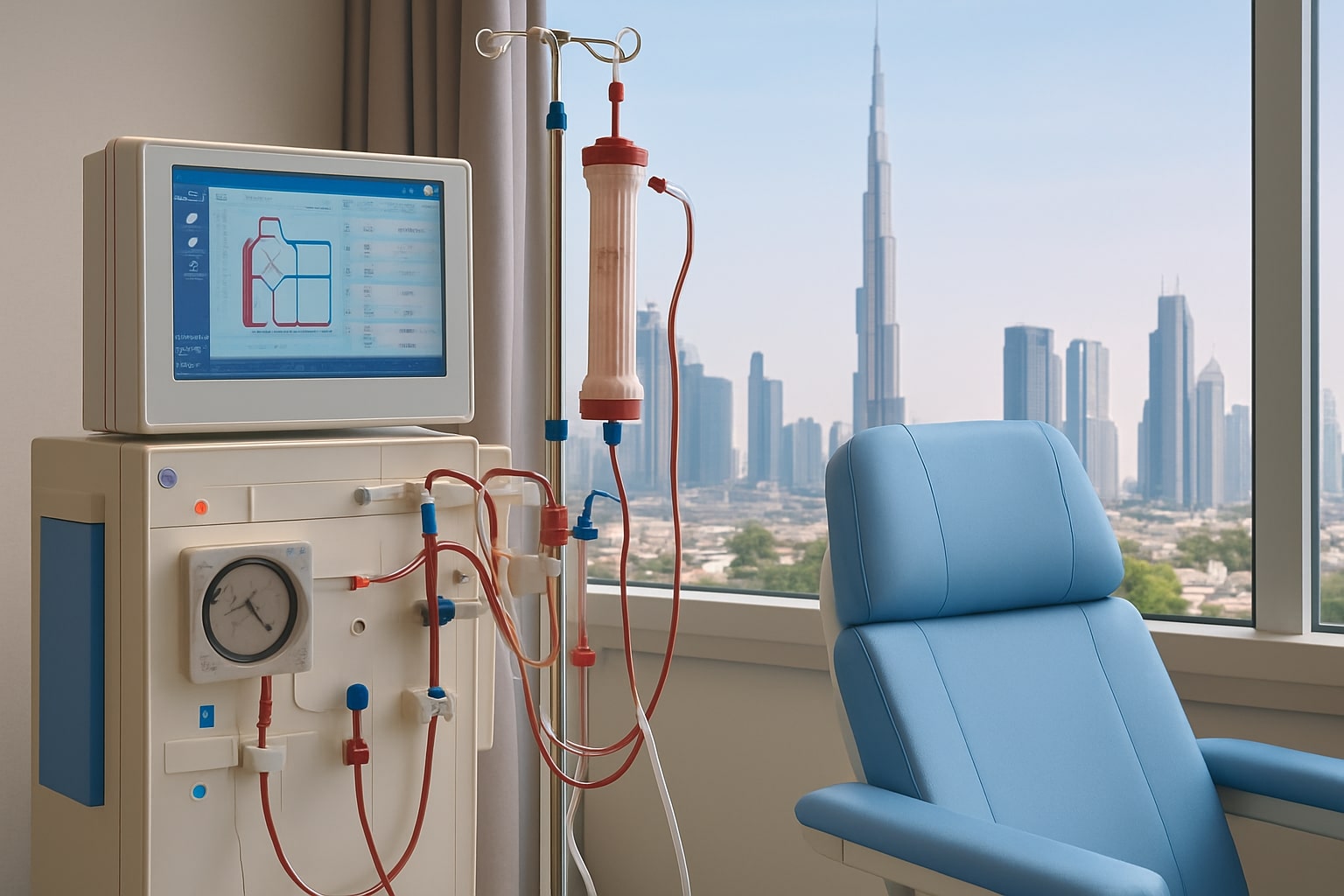
1. Navigating Dubai’s Dialysis Compliance Landscape
In 2024, Dubai’s regulatory environment for dialysis clinics became more exacting. The Dubai Health Authority (DHA) Standards for Renal Dialysis now require precise staffing credentials (nephrologist, senior nurse, certified technicians), structured bay layouts with isolation zones, strict infection protocols, water-quality documentation, and documented incident response procedures. Clinics must also maintain audit-ready credential logs, occupy trace-enabled clinical workflows, and ensure emergency transfer documentation. Non-compliance puts licensing at serious risk.
With NABIDH (Dubai’s unified digital health record system) expanding, any tool that disconnects from that ecosystem introduces administrative friction, duplication, and oversight gaps. Leading clinics now recognize digital integration isn’t optional—it’s foundational.
2. Why Traditional Workflows Are Failing Clinics
- Manual logs (paper or Excel) are slow, error-prone, and pose audit liability with misplaced or illegible records.
- Separate systems for scheduling, clinical notes, billing, and inventory create disconnects and inefficiencies.
- Credential tracking on whiteboards or spreadsheets doesn’t cut when inspections demand certifiable proof of coverage per shift.
- Infection tracking without automatic flags for HBV/HCV patient segregation can lead to breaches and clinical risk.
- Water testing logs often get lost or recorded late—earning fines or licensing delays.
- Incident reporting (e.g. vascular access mishaps, adverse reactions) is often reactive—filed days late, lacking analytics for root-cause prevention.
Clinics scrambling to maintain compliance under such workflows are not operating—they’re firefighting.
3. Clinicea + NABIDH Integration Tackles All This—for Real
a. Compliance as the Default State
Clinicea’s dialysis workflows include structured checklists: pre-session vitals, AV access checks, infection-control steps, and emergency protocols. Mandatory fields ensure no step is skipped. Staff credentials (BLS, ACLS, PALS) are tracked per shift with automatic expiry alerts—no manual cross-checking.
b. Infection Control Built In
HBV/HCV status is flagged at patient intake. Clinicea assigns color-coded bays and enforces isolation protocols. Audit logs capture each session’s compliance status, ready for inspection.
c. Water Quality Logging, Not Guessing
RO water test results—bacteria, endotoxin, chemical assay entries—are logged in real time. Clinicea triggers alerts on out-of-range values or missing entries, eliminating paper gaps.
d. Incident Response, Logged Immediately
Any adverse event triggers a structured incident capture, timestamps roles involved, and enacts escalation workflows. These are archived by date, type, and resolution—ideal for quality teams and licensing review.
e. One System for Everything—and NABIDH compliant
Clinicea integrates with NABIDH for patient demographics, labs, and visit summaries. Case data flows automatically to Dubai’s unified record system, reducing duplication and ensuring data consistency.
4. Clinical Decision Intelligence: From Insight to Action
Drawing from the LinkedIn insight (“Leveraging Clinical Data for Real-Time Decision Making”), coping with raw data isn’t enough—clinics require real-time dashboards and predictive flags.
Clinicea delivers:
- Live Compliance Dashboards show staffing coverage, checklist completion rate, infection flags, water testing status, and incident counts.
- Predictive Alerts notify if a patient hasn’t had monthly labs logged, or if staff credentials are expiring mid-shift.
- Data Visualizations help administrators see utilization, no-show patterns, inventory discrepancies, and operational trends.
These insights move clinics from reactive paperwork to strategic risk management.
5. Dubai Clinic Wins: Quiet Resilience in Action
In peer WhatsApp groups and professional forums, clinic admins share transformation stories like:
“But for this system, our last audit report would have taken days of manual searching. Now it’s instant.”
“After going digital, our admin time per session is down 30%. Accuracy is non-negotiable—and it’s now consistent.”
These brief peer notes hint at what’s happening: compliance anxiety replaced by operational calm, thanks to digital enforcement.
Clinicea’s NABIDH integration also saves clinics from combing through disparate patient sources when recertifying licenses—camouflaged record logs auto-populate.
6. Operational Efficiency Meets Growth — A Real Advantage
Dubai’s renal care landscape is expanding. Clinics that started as single-bay satellite units are now multi-site chains. Scaling that way without control leaves gaps. Here’s how digital tools help:
- Standardized protocols ensure every clinic applies the same procedures, reducing risk of variance.
- Central governance dashboards let owners oversee utilization, incident rates, credential coverage, and facility compliance across all sites.
- Automated reports simplify license renewals, audit prep, and accreditation (e.g., DHA, JCI, Accreditation Canada).
Case in point: A neighboring market study in 2025 showed centralized dialysis clinics with tech oversight delivered 20% better clinical outcomes and 15% lower operating costs. Clinicea puts Dubai clinics on that trajectory.
7. Recommended Go-Live Sequence for Dubai Clinics
- Quick Protocol Standardization: Map DHA requirements into Clinicea’s dialysis workflow — inputals for vitals, access checks, infection control, water test entries, and incident logs.
- Credential Tracking Setup: Load staff roles, certification expiry, and auto-alerts. Assign role-based access layered by shift.
- NABIDH Onboarding: Enable data flow for patient demographics, labs, and visit data in test mode; validate with pilot records.
- Operational Pilot: Run one dialysis bay for 7–10 days in Clinicea; measure admin task time, documentation completeness, and error rates.
- Dashboard Activation: Push live compliance and KPI dashboards—monitor utilization, checklist compliance, credential coverage.
- Full Go-Live: Extend across entire clinic, keep support on-site for immediate issue resolution. Plan a weekly QA review using dashboard metrics.
- Peer Sharing: Package compliance improvements and workflow savings into a case study or checklist—share via WhatsApp and LinkedIn for peer validation and inbound enquiries.
8. Hard Outcomes You Should Expect (90 Days)
| Metric | Target Improvement |
| Admin time per session | –30% |
| Clinical record completeness | ≥ 98% |
| Credential compliance (per shift) | 100% |
| Water testing log completeness | 100% |
| Incident response log time | < 24 hours |
| Billing turnaround time | –40% |
| Audit-ready documentation availability | 100% |
9. Final Word
Dubai’s regulators and payers are no longer content with “just enough”—they expect continuous documentation, data integrity, and operational visibility. Clinics still using manual workflows or fragmented systems are not just inefficient—they’re exposed.
With Clinicea’s audit-enforcing dialysis workflows and NABIDH integration, clinics gain:
- Instant compliance by design
- Real-time operational intelligence
- Scalability with governance across sites
- Fewer audit anxieties
- Better patient care and admin morale
The future of dialysis in Dubai isn’t paperless—it’s empowered.
This transformation is powered by Clinicea EMR combined with NABIDH Connected compliance for Dubai dialysis clinics.
Featured LinkedIn Article Read:
“How a 3-Unit Dialysis Clinic Cut Patient Wait Time by 45% Using Clinicea” — https://lnkd.in/gsFEaMma
Leave a Reply